
Most commercial buildings have the same handful of routine safety checks. None is complicated, but they are easy to miss when nobody owns the calendar. This is a summary of what is commonly expected. The exact schedule depends on your risk assessments and the standards that apply to your premises.
Who is responsible
Under the Regulatory Reform (Fire Safety) Order 2005, the responsible person for the premises must carry out a fire risk assessment and make sure fire safety equipment is maintained. The same person, or duty holder, is generally accountable for controlling legionella under the HSE's legionnaires' disease guidance. The government's workplace fire safety guide is a good starting point.
Weekly
- Fire alarm: test one manual call point, using a different one each week, and record it in the log.
- Legionella: flush little-used outlets such as showers and taps that are not run regularly.
Monthly
- Emergency lighting: a short functional test of every fitting, recorded in the log book.
- Legionella: check hot and cold water temperatures at sentinel outlets. Hot water should typically reach 50°C or more at the outlet, and cold water should stay below 20°C.
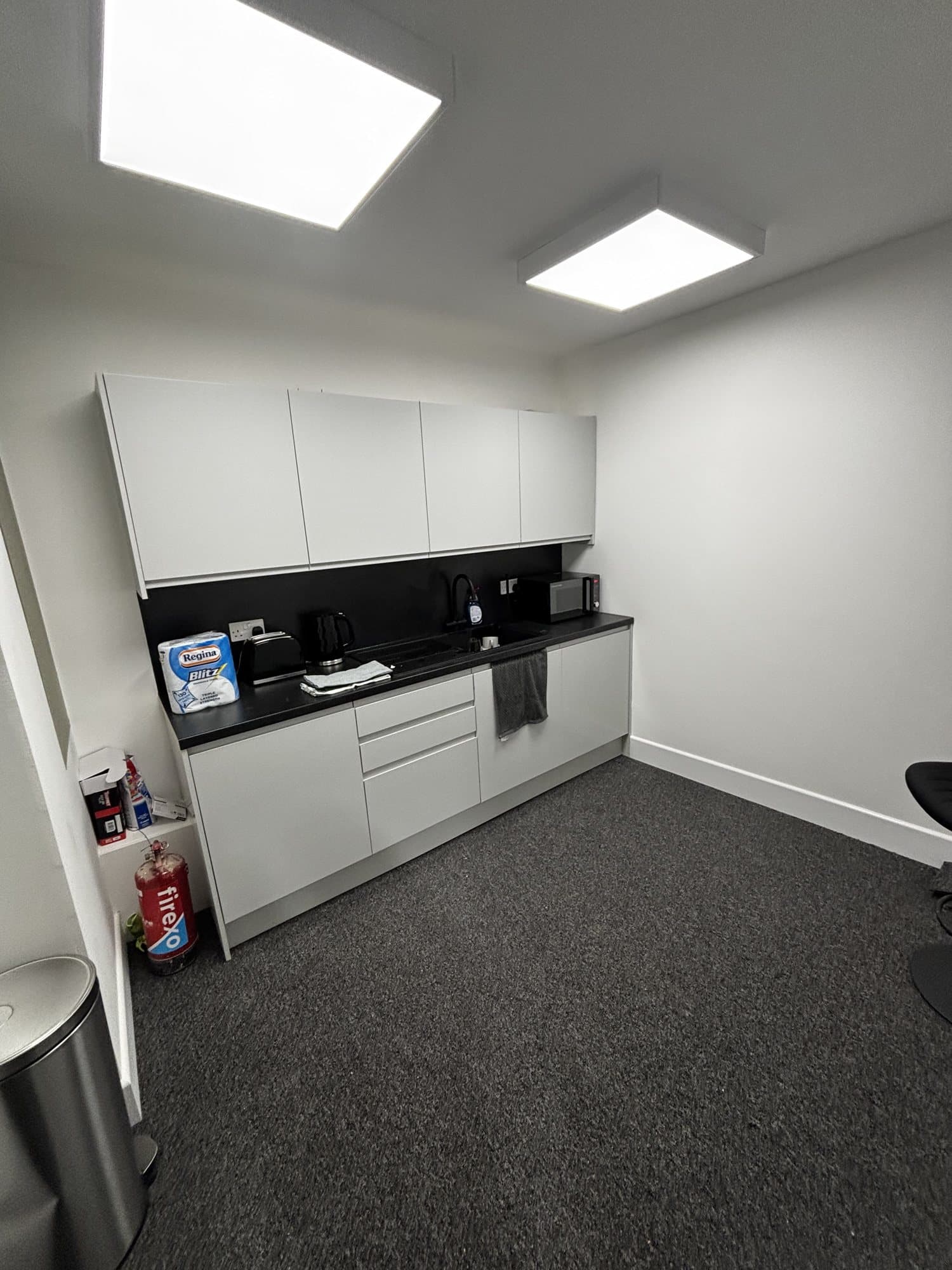
- Fire exits and extinguishers: check routes are clear and equipment is in place.
Six-monthly and annually
- Fire alarm: a service by a competent engineer, usually every six months.
- Emergency lighting: an annual full-duration test to confirm the batteries last the required time.
- Legionella: review the risk assessment annually, or sooner if the building or its use changes.
- Electrical: an EICR at the interval set out in the last report.
Keeping it under control
The simplest approach is one schedule covering every check, with named people and dated records. We help commercial clients set that up as part of facilities maintenance, arranging fire alarm, emergency lighting, electrical and legionella work through appropriate qualified contractors and keeping the records together. Get in touch to talk about your building.
Sources and further reading
Related services
See how we approach this
About the author
Written by JLS Building & Property Development Ltd, a family-run building contractor covering Bedfordshire, Cambridgeshire, Hertfordshire and Buckinghamshire. FMB member and SafeContractor approved. More about us. This guide is general information, not professional or legal advice for your specific project.