
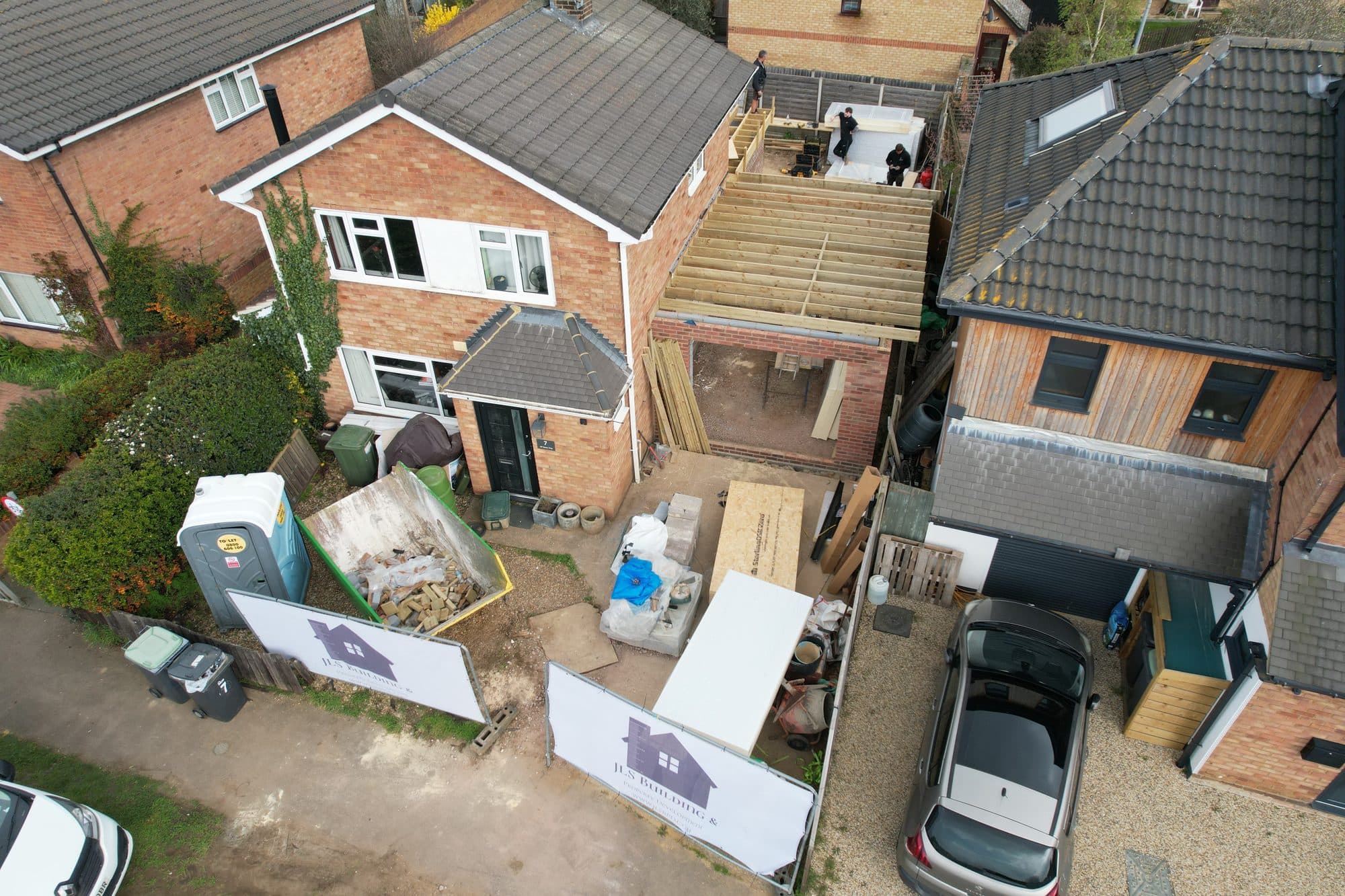
Plenty of people assume building stops in winter. It does not, but the order of work and the allowances in the programme matter more when the days are short and cold.
Groundworks first, while the ground is workable
Digging foundations, laying drainage and pouring concrete are the parts most affected by weather. Heavy rain floods trenches, and freezing temperatures can damage fresh concrete, so these stages are watched closely and sometimes paused for a day or two. Starting groundworks in the autumn means most of them are done before the hardest frosts. We built the groundworks and shell of the All Saints Way extension in Sandy through late winter and early spring.
Getting wind and watertight
The key milestone is the shell being wind and watertight: walls up, roof structure on and covered, and windows and doors in or temporarily sealed. After that, the weather stops controlling the programme and the internal trades can work in relative comfort.
What to plan for
- A few weather days. Build a small allowance into the programme so a wet week does not derail every date after it.
- Materials lead times. Windows, bifold doors and roof lanterns can take weeks to arrive, so order them early.
- Drying time. Screeds and plaster dry slower in cold, damp air, so heating and ventilation may be needed before finishes go on.
- Daylight. Shorter days mean shorter working hours outside, especially for roofing and brickwork.
Is it a good time to start?
It can be. A single-storey rear extension typically takes 10 to 14 weeks, so an autumn start can finish in the new year, ready for spring. Builders are sometimes also less booked up, which can help with start dates. Read more about how we run extension projects, or ask us for a programme for yours.
Sources and further reading
Related services
See how we approach this
Areas we cover
About the author
Written by JLS Building & Property Development Ltd, a family-run building contractor covering Bedfordshire, Cambridgeshire, Hertfordshire and Buckinghamshire. FMB member and SafeContractor approved. More about us. This guide is general information, not professional or legal advice for your specific project.